On the water

The backwaters, without the boat.

A houseboat is one way to see this water and it is not the only one. These are the others — an hour in a shikara, a village at first light from a canoe, a paddle before breakfast, and the ferry that everybody here takes and almost no visitor does. Any of them sits inside a journey, or stands on its own.

4 ways

The shikaraThe country canoeKayakingThe public ferry

Alappuzha

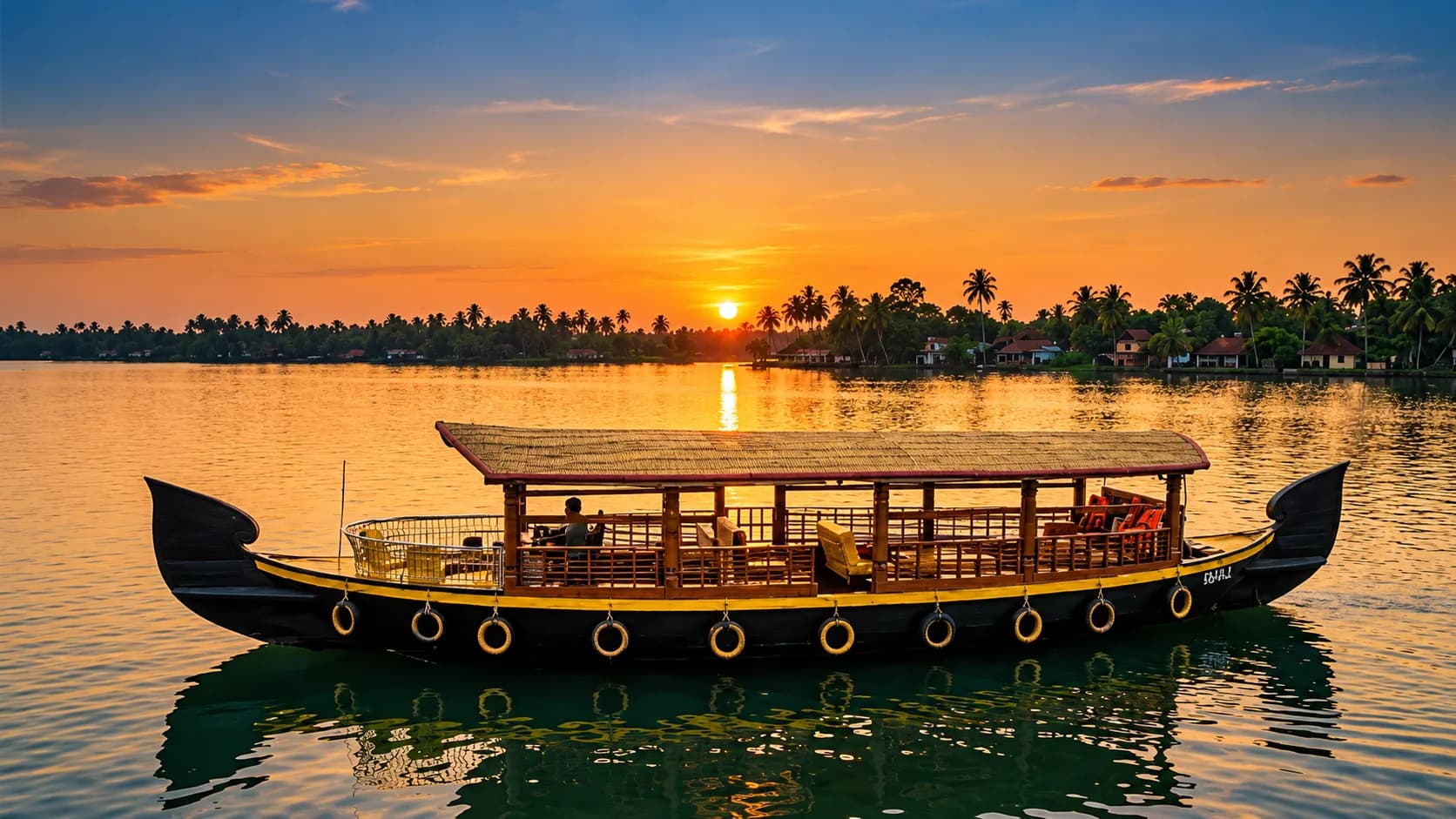
A thatched shikara on the Alappuzha backwaters at sunset, village and palms behind

The shikara

An hour on the water, in a boat small enough for the canals.

A shikara is a small covered boat with a few chairs under a canopy and an engine at the back. It goes where a kettuvallam cannot: the narrow canals behind Alappuzha, the paddy bunds of Kuttanad, the shallow edges of Vembanad where the fishing happens and the big boats draw too much water.

It is taken by the hour, and two or three is the usual. The best hour of the lot is the last one before dark, when the light goes gold and then goes quickly, and the working boats are heading home.

Where
Alappuzha and Kumarakom
How long
One to three hours
Best at
Late afternoon, into dusk
Suits
Anyone. No effort required
A boatman poling a narrow canoe at sunrise on Munroe Island

The country canoe

First light, a narrow canoe, and a man poling from the back.

If you do one thing on this page, do this one. A country canoe draws a few inches of water and goes into canals a shikara is too wide for — the ones that run between houses, where the front step of a home is the water and the bus is a boat.

Munroe Thuruthu, where the Kallada river meets Ashtamudi, is the place for it; the Kuttanad villages behind Alappuzha are the other. You go at first light, because that is when the water is still and the village is waking rather than performing.

Where
Munroe Thuruthu, and Kuttanad
How long
Two to three hours
Best at
Sunrise. It matters here
Suits
Anyone who can sit still
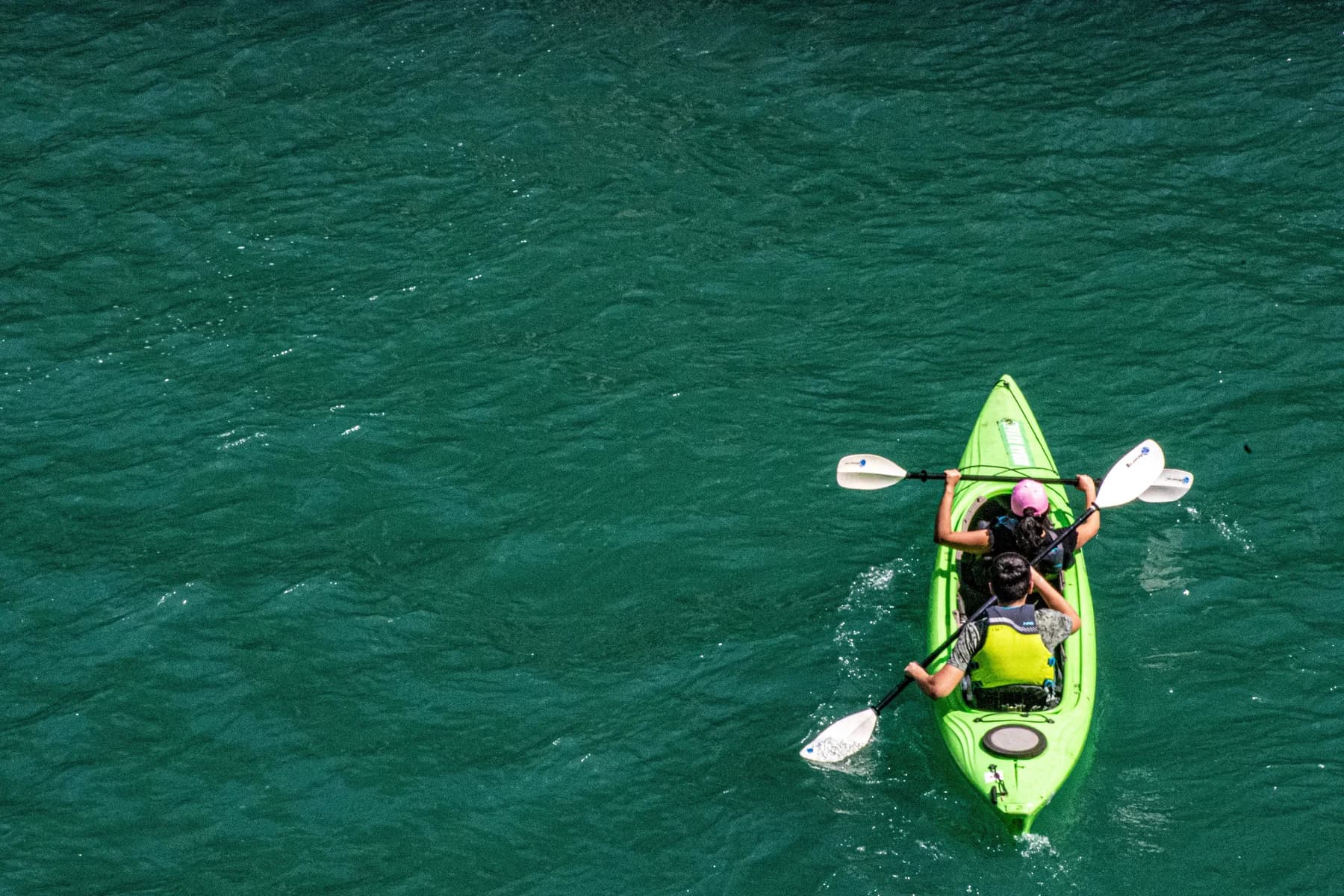
A tandem kayak on open water, seen from above

Kayaking

Your own paddle, at sunrise, on water with nothing on it yet.

The difference between this and the canoe is that nobody is doing it for you. Two hours before breakfast, out through the Punnamada canals and onto the open lake, with tea waiting when you come back in.

It suits people who would rather earn the view than be shown it. No experience is needed on flat water, but the monsoon months are not the time — the current through the canals between June and September is a serious thing rather than a picturesque one.

Where
Punnamada and Vembanad, at Alappuzha
How long
Two hours, or a half day
Season
November to May
Suits
Anyone reasonably fit
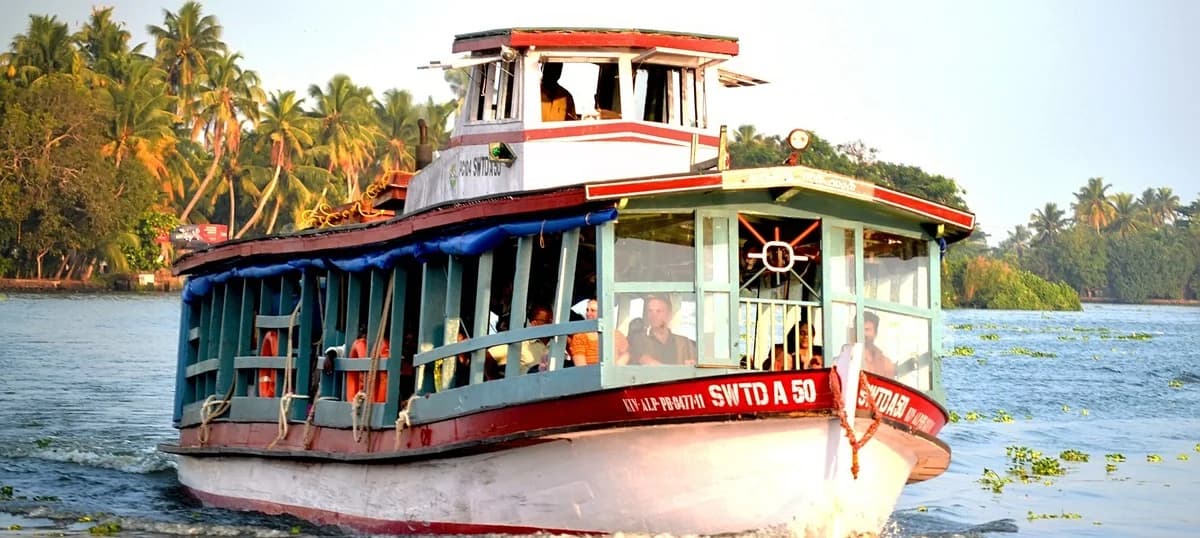
A State Water Transport ferry on the backwaters with passengers aboard

The public ferry

Not an excursion. Simply how people here cross the water.

The state ferries have been running these routes since long before anybody thought to sell a backwater. Alappuzha to Kottayam takes about two and a half hours through canal and open lake; the Kochi boats cross the harbour between Fort Kochi, Vypin and Ernakulam all day long.

You buy a ticket for the price of a cup of tea and sit among people going to work, to school, to the market. It is the cheapest thing on this page by a very long way, and a fair number of our guests come back saying it was the best.

Where
Alappuzha to Kottayam; Kochi harbour
How long
Twenty minutes to two and a half hours
Timetable
Government run, and it changes
Suits
Travellers rather than sightseers

Putting it together

Most of these belong to a morning, not a holiday.

Nobody comes to Kerala for a shikara ride. They come for the backwaters, and then there is a morning before the boat or an afternoon after it, and this is what that morning is for. Tell us which nights you are on the water and we will say which of these fits where — including the ones we would talk you out of.